
If Your Kitchen Has Gaps Above the Units, This Is Why
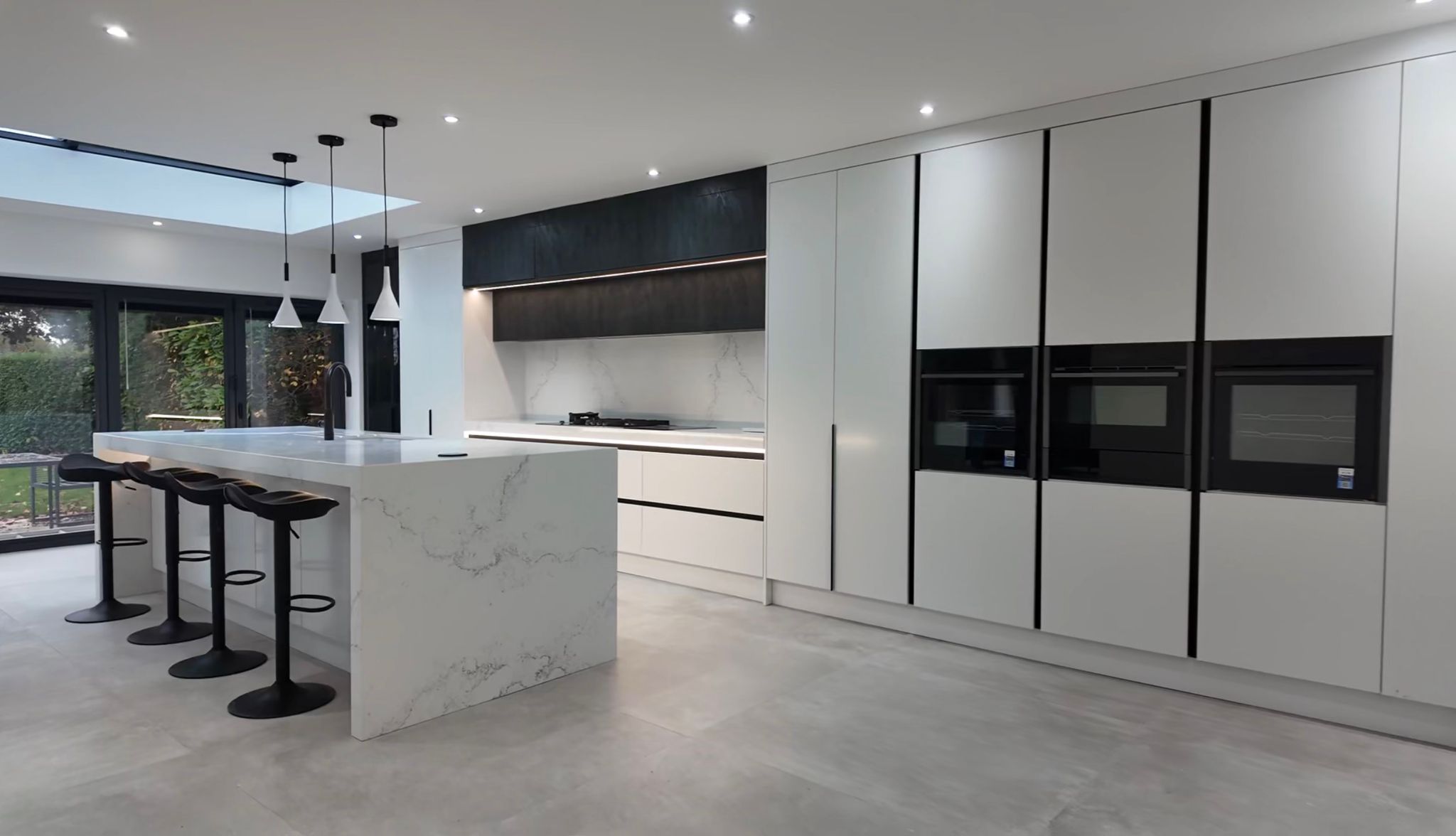
Gaps above kitchen units are so common that many homeowners assume they are unavoidable. In reality, they are almost always the result of standardised cabinet sizes, cost-driven decisions, or installation shortcuts, not good design.
In bespoke kitchen design, gaps are a choice, not a requirement.
Why gaps exist in many kitchens
Most kitchen suppliers work with fixed cabinet heights designed to suit a wide range of homes. When these standard units are installed into real spaces with varying ceiling heights, unused space is often left above the cabinets rather than redesigning the cabinetry to suit the room.
In other cases, gaps are used to reduce manufacturing complexity, speed up installation, or hide uneven ceilings. These approaches keep costs down, but they also compromise storage and visual clarity.
Why we design units floor to ceiling
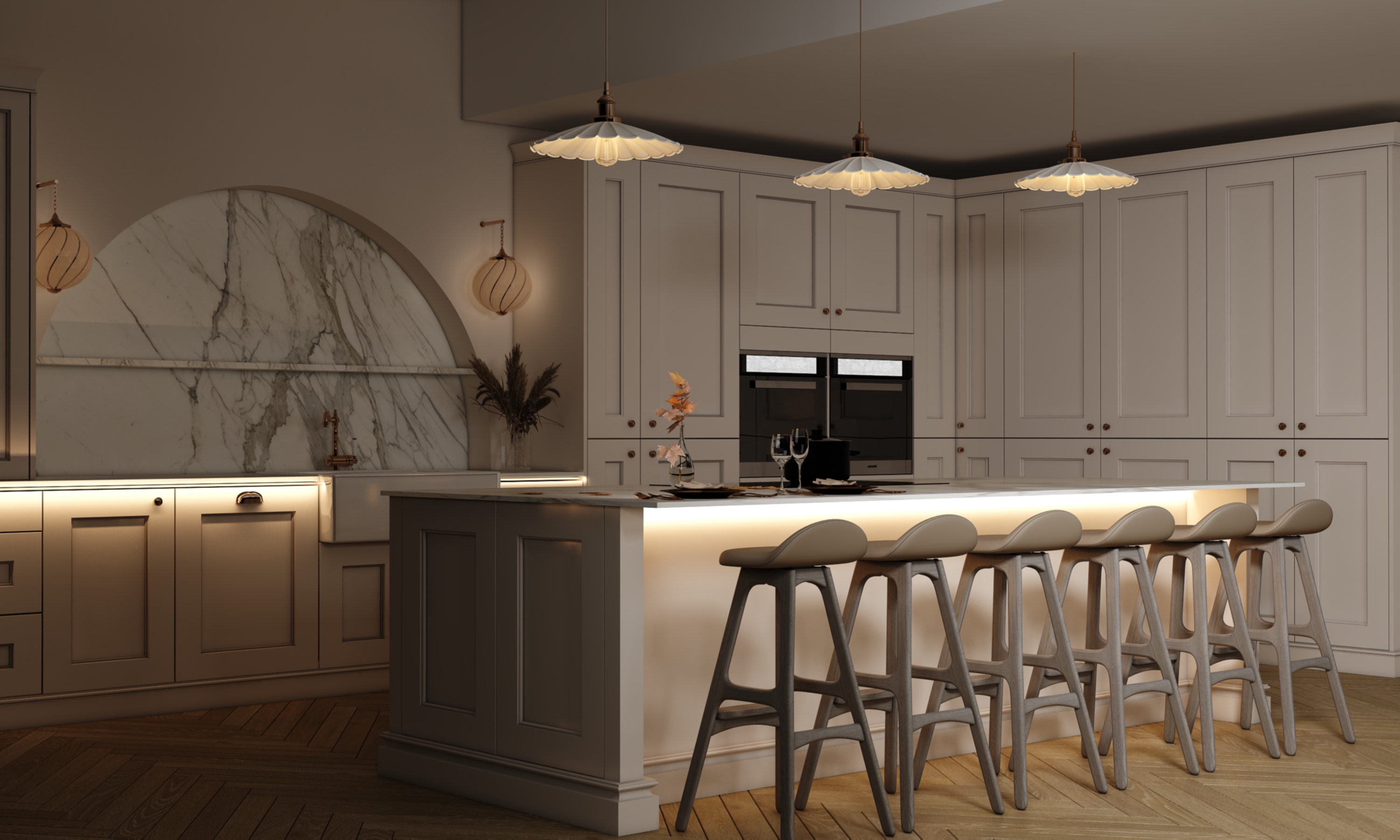
We design tall units and wall cabinets to run floor to ceiling as standard, removing the gap entirely.
This approach:
- Maximises usable storage
- Creates a cleaner, more architectural finish
- Eliminates dust-collecting voids
- Makes ceilings feel taller and spaces more balanced
A kitchen should read as a single, considered system, not stacked components.
Soft-close hardware is essential, not optional
Full-height cabinetry increases door size and weight. For this reason, every kitchen we supply uses integrated soft-close hinges and drawers as standard.
Soft-close mechanisms:
- Prevent slamming and impact stress
- Reduce long-term wear on cabinetry
- Create a quieter, more refined daily experience
We do not offer non-soft-close alternatives because they undermine longevity and consistency.
The difference you notice over time
These details are not about first impressions. They are about how a kitchen feels months and years later, when doors still align, drawers move smoothly under load, and the space remains calm and composed.
Final thought
If your kitchen has gaps above the units, it is not because it had to. It is because compromises were made elsewhere.
A properly designed kitchen does not need them.
Sign-up for exclusive deals, limited time offers and also enjoy 15% off your next project with us.
.jpg)


.png)